Sunday, 11 October 2015

UKMG Extravaganza - Joanna Nadin

Welcome to my post to celebrate UKMG Extravaganza! Today I would like to welcome Joanna Nadin, author of Joe All Alone, to the blog to celebrate the wonders and joy of Middle Grade books!

But middle grade tackle tough issues, and in Joanna's latest, she tackles the subject of poverty as well as bullying, friendship and family.

In this guest post, that's exactly what Joanna is going to take about. About why Joe All Alone tackles the issue of child poverty.

I want to thank Joanna for writing this post and I want to thank Kerry for allowing me to take part in UKMG Extravaganza. Now, over to Joanna:

Joe All Alone is a book about friendship. It’s a book about family, and what constitutes that today. It’s a book about bullying. It’s a book about difference and acceptance. But beneath all that, it’s a book about one of the most fundamental needs in life: money. I know heat, food, water come first as basic bodily requirements. But they don’t come cheap. And they certainly don’t come free. 

So the premise is this: Imagine your mum tells you she’s going away on holiday with her boyfriend. And imagine she says you’re not going; you’re staying home alone. Exciting, huh? Because you’ve seen it done before: Macauley Culkin fending for himself in his suburban mansion, then in a swanky New York hotel. The thing about the Home Alone films though is that not once does Kevin have to seriously worry about what to do when the dollars dry up; he’s minted, and besides, his mom and dad’ll be home any day to bail him out. 

Joe Holt’s house, and bank balance are a different ball game. He lives in a rundown flat in inner London, he has no money of his own, and his Mum leaves him just £20 to get through the week. Does that seem a lot? You could definitely do a decent food shop with a twenty. But add the electric meter onto that. Add the money some kid at school’s demanding off you. Then add the fact that your mum might not show up back on the doorstep when she’s supposed to. 

You do the maths, as they say. 

There are 3.7 million children living “below the breadline” in the UK today. To give you a better idea, that’s 9 kids in every class of 30, and in Peckham, where Joe lives, it’s 12 in every class. 

The truth is, most kids aren’t Kevin McCallister, not even close. And too many are in families struggling to put food on the table, to turn the heating on, to buy second-hand shoes, let alone new ones. And it’s a growing problem. Thanks to welfare cuts under this government, another 700,000 kids will be in poverty by 2020. And if you don’t believe the numbers, you only have to look at the rise of food bank drop-offs at supermarkets, or in the number of our friends who rely on them, to see for yourselves how big an issue it is. 

Yet it’s not something we read much about in books, or see up on the big screen. Glamour sells, as a rule. Plus it’s not easy speaking out, let alone writing a novel or a film, when you’re struggling to pay bills. Joe All Alone, and the follow-up White Lies, Black Dare (out in 2016), try to give those 12 in 30 kids a voice. 

Listen hard. 

And if you want to know more, or help make a difference, click on these links. 

Thursday, 1 October 2015

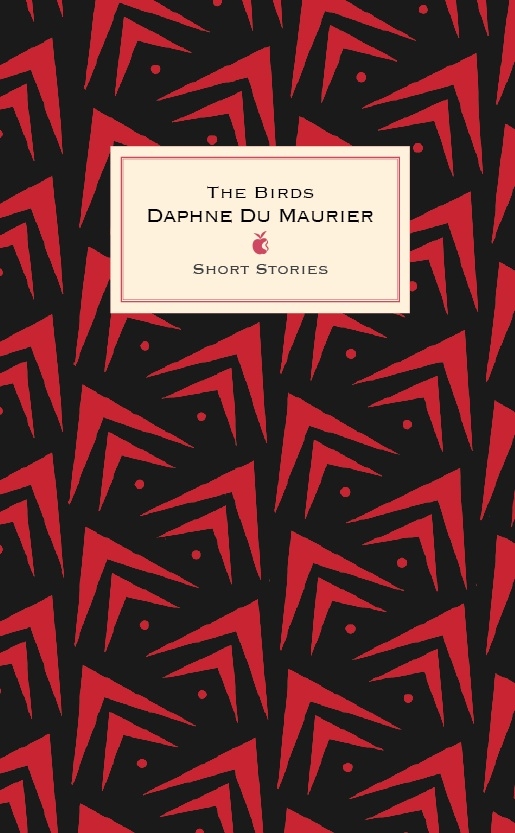
The Birds & Don't Look Now - NEW COVERS!

Today, I (with a bunch of other bloggers via Twitter - not me. Stupid work!) am unveiling the new new covers for two collections of short stories by Daphne du Maurier, Don't Look Now and The Birds. 

Shall we have a look?


I quite like these! There's something classic about it and, I believe these are hardback so the covers will look very classy! 

I'm going through a weird phase of not wanting to read short stories but am very intrigued over these. But what about you? Do you like these covers? 

Saturday, 26 September 2015

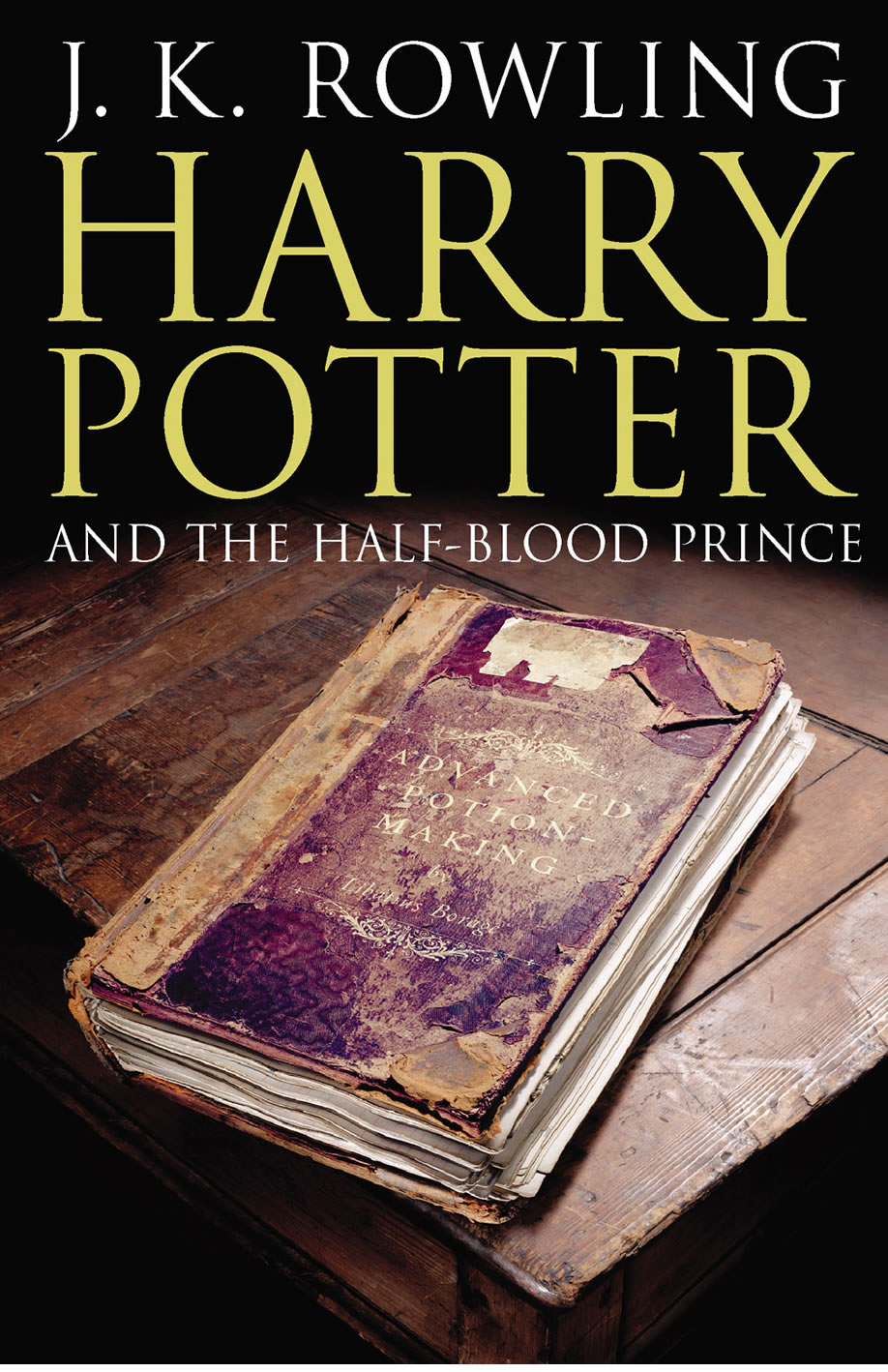
Harry Potter #re3 2015 - Harry Potter and the Half Blood Prince

Take your time reading Half Blood Prince, I told myself after reading Order of the Phoenix. Take your time. You have over three months to read two books in this series reread.

And I lasted one read. Barely a week before I started Half Blood. Barely a week! My Harry Potter obsession hasn't kicked up a gear. Nope. Not at all!

Like I said in my write-up of Goblet of Fire (that blogpost is here!), this was the second book in the series I was the most excited to read. I think it's because I have such mixed feelings over this book. After the darkness of Goblet and Order, this is quite light - we deal with teenage romance mostly. Yes, we do tackle dark subject matters in this book - Voldemort's past, Professor Slughorn, Dumbledore and Snape's relationship and Snape's character as a whole. But it feels more like a lighter book.

But there was a few things I spotted that made me stop and go "oooh".

My main thing happened in the very first chapter, The Other Minister. There's a lot of prejudice from Fudge towards the Muggle Prime Minister and the previous Prime Minister. There is a tiny section that goes thus:

Fudge fixed the Prime Minister with a rather stern look.
"Of course they were," he said. "Surely you've realised what's going on?"
"I..." hesitated the Prime Minister. 
It was precisely this sort of behaviour that made him dislike Fudge's visits so much. He was, after all, the Prime Minister, and did not appreciate being made to feel like an ignorant schoolboy. (page 10 of the UK children's Hardback).

I have always read it that the Minister of Magic is the magic equal to the Prime Minister, but Fudge's attitude is not as an equal. Fudge treats the Prime Minister like a child. Fudge, like most witches and wizards, believe that they are superior to Muggles. If you are not a witch or wizard, you are behind them, belittled, treated as a "Other".

We see this happen time and time again through the course of the series - Malfoy called Hermione "Mudblood" in Chamber of Secrets, Fudge's reaction at the end of Goblet of Fire when Dumbledore told him that the Ministry must talk to the Giants, Umbridge's reaction to the centaurs in Order of the Phoenix and wizard's reaction to character's blood status. But it seems to be in this book that this creeps forward, but is lost underneath the fluff of young love.

For example, in The Other Minister, the Prime Minister remembers Fudge's visits to him over the past few years and how, with each visit, the visits getting shorter and shorter. The previous visit was so short that Fudge, according to my read, never left the Floo Powdered fire. He still had a foot in it as he said that there was a mass breakout from Azkaban. He gave the Prime Minister no information.

We see Trelawney getting angry at Firenze staying at the school as joint Divination as, on several occasions, she calls him "usurping nag" and "Dobbin", renaming him to a name used for donkeys. When Malfoy confronts Dumbledore near the end of the book, he uses the term Mudblood and Dumbledore asks Malfoy not to use the term, but Draco laughs.

But the time prejudice really hit me - barring The Other Minister - was in the chapter Elf Tales, when Hagrid is taking Harry and Hermione back to the Gryffindor dormitory after they saw Ron in the Hospital Wing (due the poisoning in the previous chapter) and Filch catches them and threatens detention. When Hagrid says that they won't and Filch questions this (obnoxiously), Hagrid shots back "I'm a ruddy teacher, aren' I, yeh sneaking' Squid!". Now, seeing as Hagrid has be persecuted most of his life because he is a half-giant, it's shocking to read that Hagrid throws the term Squid at someone like an insult.

You can't help but wonder if there is a hint of bigotry within the wizarding community towards anything or anyone they deem as "Other"...

There were other little things I missed - we hear and meet Umbridge again. Why did I, on my first read, not notice Umbridge in this book and that she was still working for the Ministry? She still has a fear over centaurs - which is making wonder what exactly happened to her in the last book.

Also, in one of Dumbledore's lessons, we meet a character called Hepzibah Smith. Is she related to one of Harry's fellow classmates, Zacharias Smith? And if that is the case, is he related to one of the Hogwarts's founder, Helga Hufflepuff? And, at Slughorn's Party, Luna talks to Professor Trelawney about the Rotting Conspiracy and Professor Trelawney "seemed sincerely interested". Why would Trelawney be interested in this? I found her and Luna's interaction fascinating to read and wished for more.

While I didn't come away from this book with the same reaction as Goblet of Fire, am nearly at the finish line! ONE BOOK TO GO, PEOPLE! ONLY ONE BOOK TO GO!!!

Tuesday, 22 September 2015

GoodRead - The Small Hand

This was meant to be my review for Halloween. For once, I wanted to read and review a story for Halloween and I thought it would be perfect. I mean, Hello! It says so on the cover - A Ghost Story. 

I have read two of Susan Hill's ghost stories before - The Woman in Black (review here) and The Man In The Picture (review here), and I have two quite different opinions of these titles. So this is my third and the story I hoped was going to make my opinion for Susan Hill's ghost stories go one way or the other.

Adam Snow is an antique bookseller. Late one day, on his way home from a client, Adam gets lost and finds himself at an old abandoned house and its gardens. Finding no one there, he's about to leave, only to feel a small hand grip his. But there is no one at the house or the gardens.

Soon, Adam starts to feel like he is being haunted by the small hand. But is he really haunted by a ghost or is he gripped by panic attacks and hallucinations?

Am going to admit this. Out of the three Susan Hill's ghost stories I have read, this is a my least favourite. Maybe I wasn't in the right mindset for the story, but I found it a little dull. I was hooked by the end for the first few chapters, but my attention kept wandering and, at one sitting, where I wasn't feeling so great, I read a huge section and nothing sack into my brain. It left no trace, and I didn't once feel uneasy by the story and the haunting.

My biggest issue was the writing style. In The Woman in Black, the style fitted perfectly because it was set back in the early 20th century. But The Small Hand was a modern story - they was mention of emails and texts - and it felt out of place. I don't know why, but every time something modern was mentioned or appeared, I was instantly thrown out of the story. It never felt right.

But, the writing does carry a sense of unease. Susan knows how to write that, but the feeling of unease can only go so far and I wanted something to happen. Something that would creep me out (and I can get scared very easy so I was awaiting the scare in a mix of excitement and fear). But it never came. There was a conclusion but nothing else. Where was the pay off for this story?

Another thing I wasn't happy with was when information was dropped in. I get it's a story and things can't be put right at the start, but there was one or two bits of information that was thrown at us and, while they served a purpose for the story, it felt like these were rushed in. There were dropped in as an afterthought, even. That I found jarring.

I admit that this wasn't the type of story I normally read, but out of the three, I would say read The Woman in Black if you want a ghost story that will creep you out. But this is my opinion, and from the other reviews I have read, I am in the minority so if you want to read this, read it! Please don't let me stop you! Because this wasn't my cup of tea doesn't mean it won't be yours!

Sunday, 20 September 2015

UKYA Extravaganza 2015 - Alex Campbell

Hello everyone, and welcome to this stop on the UKYA Extravaganza 2015! I am here today to welcome author of Land and Cloud 9 to the blog, Alex Campbell! Now, I do have a copy of Cloud 9 on my TBR and am quite intrigued over where the book is going to go as it's handles bloggers - and as a blogger, am a mix of excited/scared over it!

But before I hand it over to Alex, I just want to say thank you to Alex for writing this piece for the tour and thank you to Kerry for organising this tour - and thank you for including me! Am quite honoured to be involved.

Now, without any more delay, here's Alex...

Thanks for having me Andrew! I’m made up to be a part of Nottingham’s UKYA Extravaganza – it’s incredibly exciting, and all possible because of two brilliant writers and all-round life-givers, Emma Pass and Kerry Drewery. Gushing and glowing over, now onto me, me, me (I can only apologise). So you asked me about why I like to write about big issues in my novels LAND and CLOUD 9. 
In truth they often don’t start off that way. LAND and CLOUD 9 both emerged from what I think of as Big Questions – a personal choice I will probably never get tested on – the larger of the what-would-I-do-ifs . . . 
The question that sparked Land was: would I risk my life to save strangers, if it put my loved ones at risk? It’s a question I’ve liked to torture myself with for years (masochist). It always bothers me there’s a huge part of me I might never know. I mean, I can think myself a good person, I might do every day good acts, but really, when pushed, if the lives of strangers were at risk, would I stand up? Would I sacrifice my own safety and that of my family for the lives of others? I’ve always wanted to know the answer. Just like I want to know what I’d have done had I been on the Titantic (would I have stayed behind with my man or leapt double-quick onto the first lifeboat?) Or whether I would eat human flesh to survive? Or if I stumbled across an unpublished manuscript that was blummin’ brilliant, would I nick it and claim it as my own?! Or try this one:

You find a suitcase filled with millions of pounds . . . 
Do you take it? No?
What if you’re in dire need of money – then?
Or your brother needs an expensive life-saving treatment – then?
What if I can tell you – you will never ever be found out. Now do you take it? Yes?
But then what if you find out it belonged to someone who needs it more? And you’ve already spent it?
Or what if some criminal faces death because they lost their drugs warlord’s money? Do you seek them out? Or stay quiet?
And we haven’t even got started on how the money might affect you, your life. For better, for worse?

Writing a story can help you delve deeper and darker into the what ifs of your subconscious, but to truly answer them I believe you need to broaden your questions out into the big bad world – because let’s face it, that’s what’s made you . . .and so I suppose that’s when the bigger issues in society come into my stories like they have in CLOUD 9 and LAND.

In CLOUD 9 my personal big question was: if there was a harmless happy pill that everyone was taking – would I? To properly test my personal choice, I had to journey into the environment I live in. I needed to take a good look at society and its influences, our culture, our beliefs, all of which have a bearing on my life and the lives of others. 
I soon found myself digging away at this emerging culture towards instant happiness and positivity – from celebrity vloggers preaching about being positive and ways to banish ‘bad thoughts’, to Big Pharma and the millions they make from pills that adjust people’s moods, including children’s.
I started examining the ‘what ifs’ of society. Questions grew. What if we do turn increasingly to pills to get us through any painful moment, to banish hard memories, to stay appearing ‘normal’, happy, positive? What happens to the spectrum of human emotion – if melancholy is kicked out? What happens to poetry, to stories that are dark, to music that can tap into human pain? 
If we start to self-censor negativity by ‘banishing bad thoughts’, how soon will society start to censor material that incites bad thoughts? And what about those who can never forget or bury pain no matter what? Do they get pushed to the periphery of society?
Questions grow branch-like, before you journey back down to the roots again, to the something simple that knits your story together: What’s so wrong about being sad? 


Whether it’s personal issues or public ones, delving deeper and writing a story always helps to remind me that at the end of the day it’s just so important to question – yourself, others, society . . . and never stop questioning, even if the answers allude you. What if, what if, what if.

Thursday, 17 September 2015

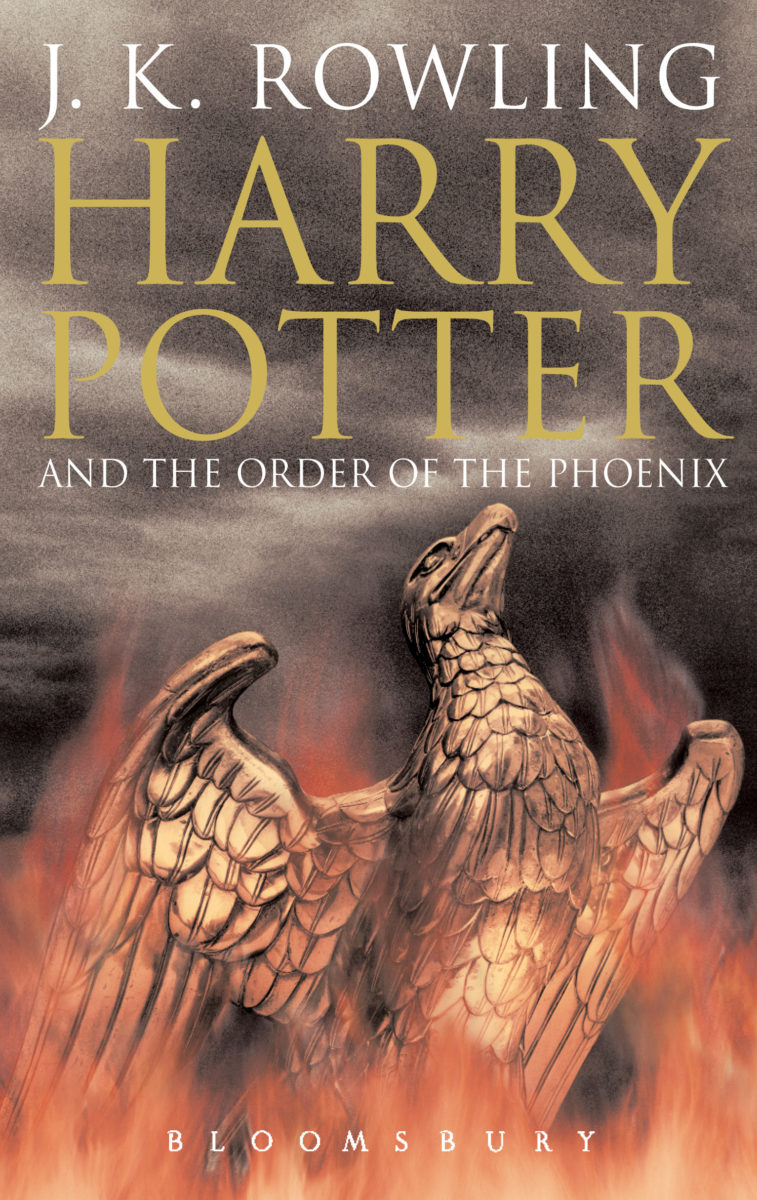
Harry Potter #re3 2015 - Harry Potter and the Order of the Phoenix

So, here we are in my trying to reread all seven Harry Potter books in one year. The big mama! The beast we call Harry Potter and the Order of the Phoenix. 

Now, as you guys probably know if you have followed my blog for quite some time, I have reread this several times in the past. My opinion of it has changed somewhat. When I first read this book, I disliked it. Quite a bit. And when I reread it a few years back, I did like it but I had a lot of problems with it. The "Grawp" subplot which adds NOTHING to the overall story. The "Weasley Is Our King" that borders on and beyond into bullying and yet, NO ONE PUT A STOP TO THE BULLYING. The subtle hints of blood-purity and racism in Hogwarts (there's a scene where Pansy Parkinson shouts "looks like worms" or something to Angela Johnson, which is a dig at Angela's skin colour because she's black. Also, the way the Gryffindor ignore it and the Slytherins enjoy this shows that this isn't the first time that racial slurs have been used - I thank Oh Witch Please for pointing this out).

But the biggest thing I saw that I have never seen before is the lack of emotional support that the students of Hogwarts are given. Let me explain. At the end of Goblet of Fire, a student - Cedric - dies. He is murdered in front of Harry and Cedric's dead body was seen by the students not only of Hogwarts, but of Beauxbatons and Durmstrang. The students are at Hogwarts for several days/weeks then go into the summer term. No grief counsellors in sight. And then, when the students return to Hogwarts - we see several characters that would benefit HUGELY from grief counselling (Harry and Cho are two characters I can think of off the tip of my head), do they get the emotional support they need through this difficult time? No. No, they don't. And with Harry being so angry and SHOUTING IN CAPITAL LOCK FOR A GOOD PART OF SEVERAL LONG CHAPTERS, this would be hugely helpful.

And yet... nothing. Harry is left alone with his emotional struggles. Even Dumbledore, who says he cares for Harry and yet, leaves him alone because he thinks that for the best, doesn't seem to be worried about his emotional state. Instead, he is worried about Voldemort breaking into Harry's mind - and he thinks leaving a hugely emotional-damaged child (Harry is 14 in this book, by the way) is the safest course of action.

Because of this, it made me really wonder about how the wizarding world treats mental health - something we see in Christmas on the Closed Ward but when you look at the characters in this chapter on that ward, they could be classed as mentally unwell. But, they are in a locked ward in a general hospital and we don't get any information on if there is a wizarding hospital focused solely on patients with mental health issues.

But this is an extreme. What about people who suffer from grief? OCD? Post Traumatic Stress Disorder? Anxiety attacks and panic attacks? Eating disorders? Depression? Schizophrenia? Bi-polar disorder? What about people who live a "normal" life with this? Where is the emotional support there? Because, barring the Christmas on the Closed Ward, we see no one with a mental health problem.

I love this series, I do, but I want to be critical over the series. And this is why rereading this series is so much fun. Something new will always be discovered!

Right, I have two books to go and 3 months to read them! I CAN DO THIS!!! I THINK I CAN DO THIS!!!

Tuesday, 15 September 2015

Oh No! It's Happening Again!

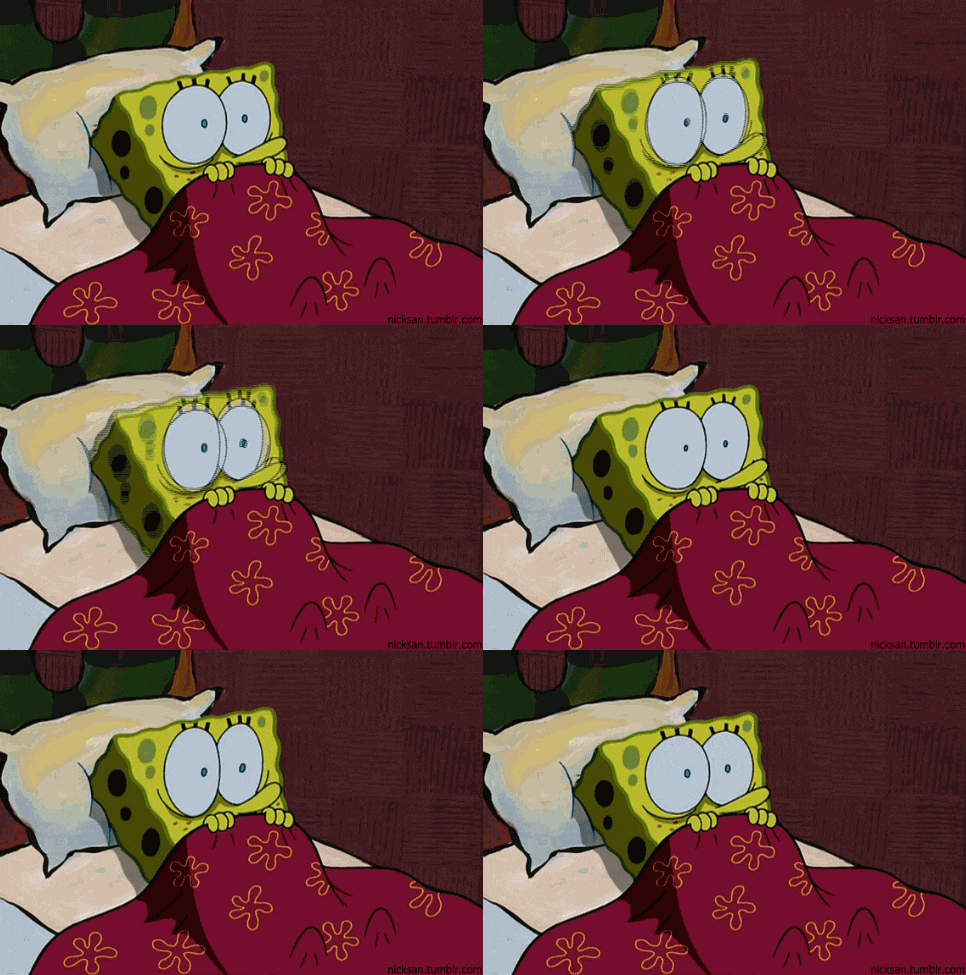
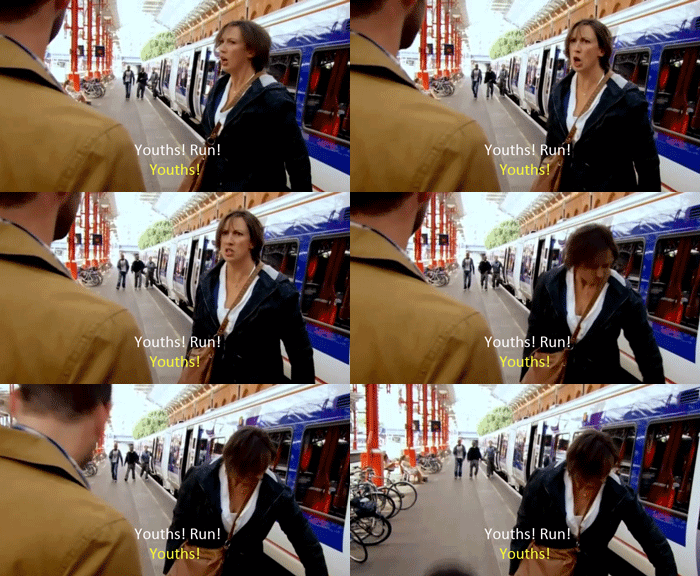
Do you remember that time when I was asked to be on a panel for a workshop at YALC? You remember my reactions to that, right? A mix of this...


And this...


With these two thrown in just for good measure! 


And it went ok. I worried for nothing! I had fun, I didn't scare anyone that badly and it was nice to chat about books and blogging without people going "Why are you still talking about books? Are you normal?".

Well, it's gonna happen again. I have been asked to be involved in another workshop/panel-type thing at the Young Adult Literature Weekender this coming October!

The event is taking place at the Southbank Centre in London on the 3rd & 4th of October as part of the month long London Literature Festival. I will be there on Sunday 4th October at 4pm(ish), chatting to Andy Robb about "the art of blogging" with two other bloggers, Casey from Dark Readers and Lucy from Lucy The Reader, two people I know can act all cool and youthful whereas I will probably act like this:


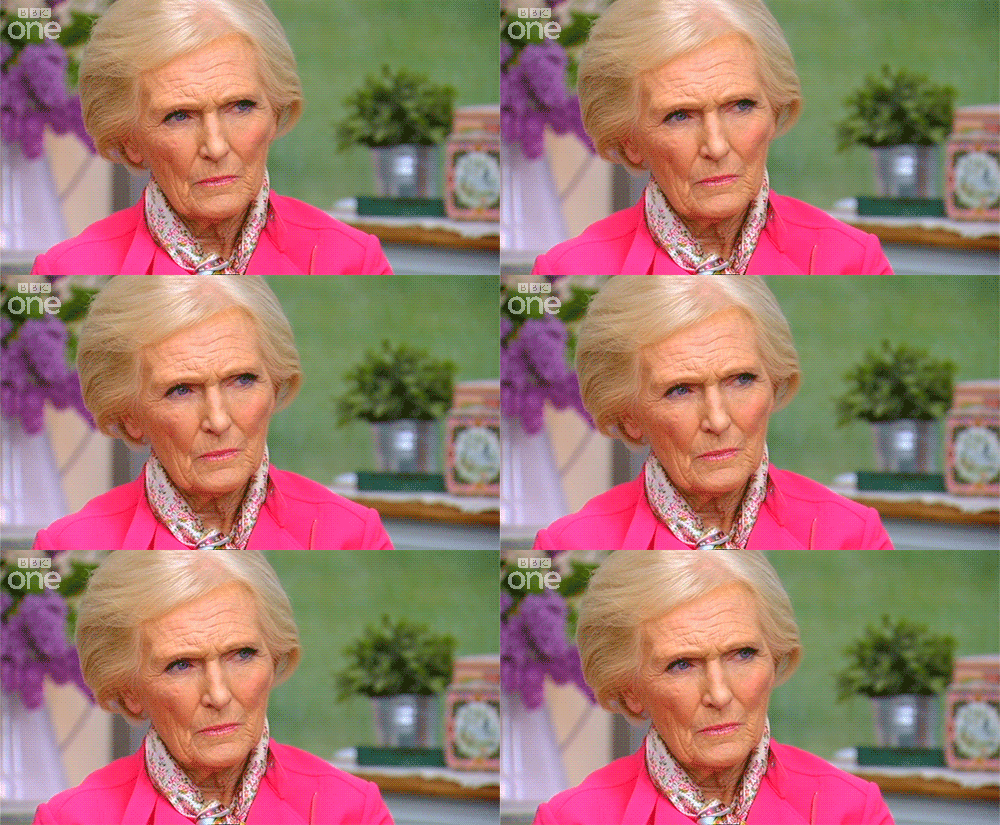
And wonder why Mary Berry doesn't have a Murder She Wrote type show. I mean, can you imagine the murderer's reaction if he/she was give this look by Mary?


I'm not sure the plan of action with me that day will be (I am a little older than the ages given on the site) but I will be around, plotting and trying not to panic in public. But will be fine! Should be a laugh! 

If you are going to this, I shall see you all on Sunday. If you want to get tickets or get more info, go to http://www.southbankcentre.co.uk/whatson/young-adult-literature-2015-93154 for more details! 

Monday, 14 September 2015

Why CBeebies Should Be Saved

The last few days, the rumour mill has been in overtime because of the BBC. Last week, the Director General of the BBC, Tony Hall, announced that the BBC "faces a very tough financial challenge. We will inevitably have to close or reduce some services". Because of this, people fear that the one of the closures will be the CBeebies channel, aimed for preschoolers, could be axed and moved to an online service.
Because of this (and me trying to understand more about what could mean), I did an open call on Twitter about this. 

Rhys from ThirstforFiction answered the call and sent me this tiny piece, which I wanted to show with you guys. I hope you guys really like reading this and, hopefully, we can have an open discussion over the BBC - the good and the bad!
Before I hand it over to Rhys, please check his blog out at ThirstforFiction.com and his Twitter, @rhyswolfgang. Rhys also wanted me to point out the change.org website so if you want to add your name to the petition, you are more than welcome.
I must thank Rhys for this as well. Thank you for taking time out to write this and allowing me to put this on my blog. Thanks! 


*


I’m a first year university student, and I love the BBC. It’s a love I’ve held for a long time: from my first discovery of Attenborough’s wildlife documentaries The Life of Mammals and Blue Planet aged 7 to Sherlock, Louis Theroux, Doctor Who, Michael Mosely, Top Gear (RIP…), Have I Got News For You, QI and more. These shows are something I’ve taken for granted, really. Until I went travelling.

It was awful.

In Australia, I regularly watched the “news” every evening, if you can even call it that. It was shallow, vapid, and interrupted by more adverts than content. News broadcasters seem to shy away from actual news and prefer to have awful, chat-show.

Another morning in Australia I spent with a family with young children. They watched Peppa Pig and a few more BBC productions with their 5 year old daughter. I asked them if there were any good Australian children’s shows for younger kids. They said no. This struck me as tragic. Whist I was there, none of their kids watched TV that was voiced with native accents: everything was either American or British. There may be a time and a place for globalisation, but kids and toddler’s TV is not one of them.

So news that the BBC is potentially axing CBeebies, its channel for toddlers and young children, is somewhat distressing. I believe children have the right to access content that is voiced by their native accent and advertisement free. Chopping CBeebies will make it distinctly harder to make this possible. 

Think back on your childhood, or your kids’ or grandkids’ childhood. What were the characters they loved best at that young age? Invariably, most of them are from the BBC: Postman Pat, Teletubbies, Pippin, Peppa Pig, In the Night Garden and more I’ve never even heard of…because I’m not a toddler or parent!

I can’t blame the BBC – they’re facing significant budget cuts AND they’ve just been asked to foot the bill for the licence fee of every pensioner, who get the BBC “for free” (something I profoundly disagree with) AND they’re trying to fight a political battle against the Conservative government, who apparently want to drive the BBC to a size so small they effectively become meaningless.

Sure – the BBC might be bloated in areas. Every organisation should be as efficient as possible. But when imposed budget restrictions mean that a service ends up having to cut significant services like CBeebies, as well as BBC News and BBC4, you know you’re scraping the bottom of the barrel. The BBC has become a political battle when it’s ideal is to be as objective to current politics as possible. But that’s hard to maintain when one of Britain’s greatest assets is being slowly throttled to death.